A little about me.

I’m Pakaphol
Thadawasin.
I go by Big.

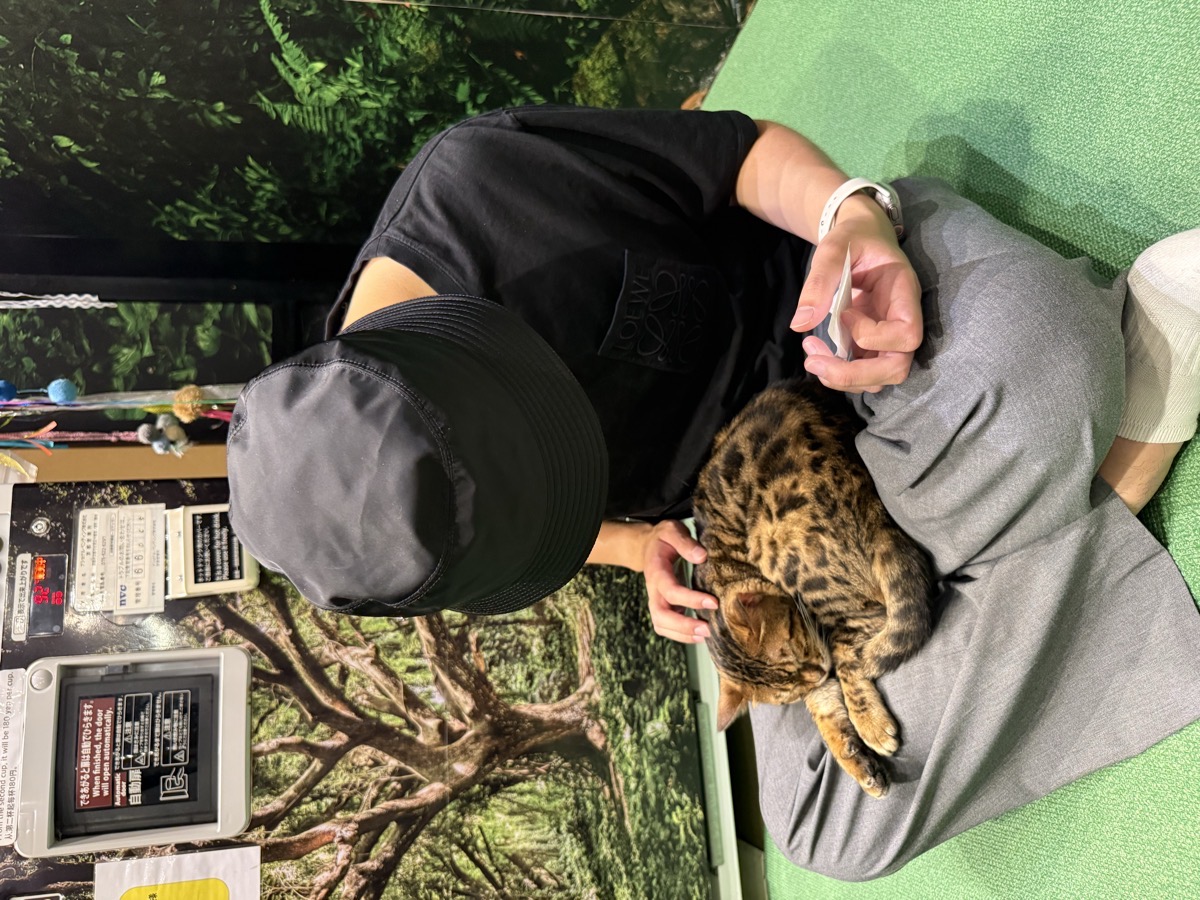
Big sitting with a sleeping cat on his lap
Away from the keyboard.

Born and raised in Bangkok, Thailand. I spent my college years in Cambridge, MA, earning a BS and MEng in computer science at MIT, with a minor in mathematics. My focus is machine learning, large language models (LLMs), and AI agents.

Now based in Bellevue, WA. Researcher, engineer, or foodie, depending on when you catch me.

Two-time silver medalist · 2018 & 2019

International Chemistry Olympiad (IChO) ↗
Personal
pakapholacp [at] gmail [dot] com
Work
bthadawasin [at] microsoft [dot] com
MIT alumni
big536 [at] alum [dot] mit [dot] edu

I’m open to startup opportunities as a founding member of a team. If you’d like to talk, I’d be happy to connect.

My interests

Making AI actually useful

I’m an AI researcher and engineer. I want to make AI actually useful in everyday work and make it easy for anyone to access and use. I currently approach that goal through alignment and post-training research (definitely more to come in the future!). Working on Microsoft 365 Copilot and TikTok Shop’s customer service AI made me want to own more of that process, from testing a research idea to shipping it and seeing how it helps customers.

How I work

I bring energy to my work and learn quickly, especially on fast-moving teams where people are excited to work together. I care about doing the work well and understanding the decisions behind it. I ask “Why?” to get to the root of a problem, then “What if?” to find an idea I can test. That’s how I get up to speed on new problems.

Education

Massachusetts Institute of Technology

Cambridge, MA

MEng in Computer Science and Engineering

Aug 2024–May 2025

Theoretical Machine Learning, Deep Learning, TinyML, and Advanced Complexity Theory.

BS in Computer Science and Engineering (6-3)

Aug 2021–May 2024

Algorithms, Machine Learning, Natural Language Processing, and Theory of Computation.

Experience

  1. Apr 2026–present

    Microsoft

    Machine Learning Applied Scientist

    Training and evaluating language models for workflows across Microsoft 365 apps.

    More detail

    I train sub-frontier language models to perform well on tasks that span Microsoft 365 apps such as Word, PowerPoint, and Excel. My work covers agentic mid-training and post-training, including supervised fine-tuning (SFT), on- and off-policy knowledge distillation, and reinforcement learning.

    For MAI Work Flash ↗, I contributed to cross-app post-training. My main contributions include defining tasks and rewards, building synthetic training datasets, setting benchmark goals, evaluating model checkpoints, analyzing where models struggle, and contributing to reinforcement learning environments. We partnered with the MAI Super Intelligence team to incorporate our data into the broader training mix and recommend how to train on it. We also work closely with Microsoft 365 product teams to understand how each app works and how customers use it.

    Earlier, I helped build and ship Agent Mode in Outlook ↗, built classifiers for an LLM router (including BERT and random forest models), and developed a multi-agent system that iteratively refines its own work. I enjoy working across products because it helps me understand how customers use them and where we can make their work easier.

  2. Jul 2025–Apr 2026

    TikTok

    Machine Learning Applied Scientist

    Chatbot development and online evaluation for TikTok’s seller customer service.

    More detail

    In customer service, issues can quickly affect customer satisfaction, so detecting and understanding them in production is essential. I developed features that connected different service domains within TikTok’s seller customer-service chatbot, giving users a unified experience. I also worked on online evaluation, using production experiments to guide decisions and quickly detect and analyze issues affecting the customer experience.

  3. Sep 2024–May 2025

    MIT Edelman Lab

    Research Assistant

    Evaluation and gene attribution for single-cell foundation models.

    More detail

    I researched how to capture the interplay between genotype and phenotype, advised by Prof. Elazer Edelman. One approach involved training models and using explainable AI methods to visualize and interpret the relationships they learned. This included developing evaluation and gene-attribution methods for single-cell foundation models. I contributed to this research under the mentorship of Farhan Khodaee and Rohola Zandie, who later co-founded Absentia Labs, building on this broader research direction.

Things I’ve worked on.

01

Paper · arXiv preprint · 2026

EmailBench

Evaluating email agents across 206 enterprise scenarios and 16 task categories.

More detail

A Benchmark for Evaluating LLM Agents on Enterprise Email and Productivity Tasks. We introduce 206 scenarios across 16 task categories to evaluate whether email agents complete tasks, combining executable checks with language-model grading.
02

Paper · ICLR 2025 MLGenX Workshop · Tiny Paper Track

Gradient-Based Gene Selection

Selecting informative genes and interpreting single-cell foundation models.

More detail

Gradient-Based Gene Selection for scRNA-seq Foundation Models. Research on gradient-based attribution for selecting informative genes and interpreting what a single-cell foundation model learns.

03

Paper · npj Aging · 2025

The Dissipation Theory of Aging

Quantitative analysis of entropy and aging across tissues and cell types.

More detail

My contribution focused on quantitative analysis, including entropy analysis and plots showing how entropy distributions evolve with age across tissues and cell types.

04

Project · MIT 6.5940 TinyML

LLM Quantization & Inference Efficiency

4-bit LLaMA quantization and optimized CPU inference kernels.

More detail

I explored 4-bit weights and activations for LLaMA through post-training quantization and quantization-aware training. I also wrote ARM NEON and x86 AVX2 kernels for INT4 matrix multiplication in on-device LLaMA2-7B inference, using vectorized dequantization and multithreading.

05

Project · MIT 6.7960 Deep Learning

How Well Have VAEs Learned Latent Space?

Exploring how VAEs represent and disentangle underlying factors of variation.

More detail

I investigated disentanglement in the latent representations learned by variational autoencoders (VAEs), examining how they represent underlying factors of variation.

Always up for
a good meal.

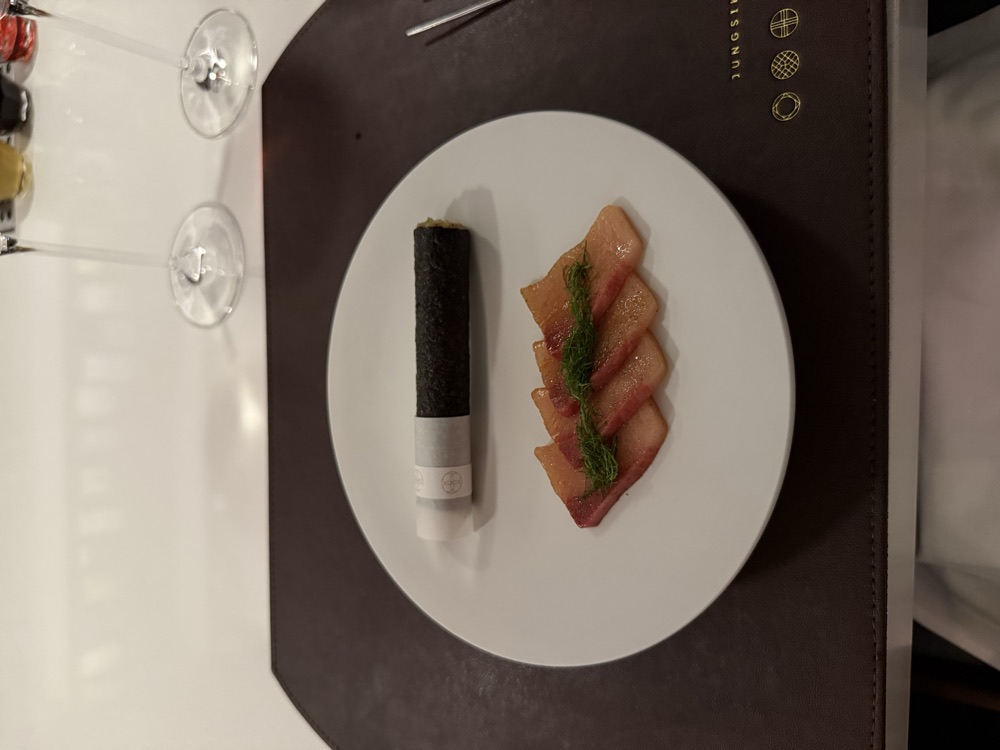
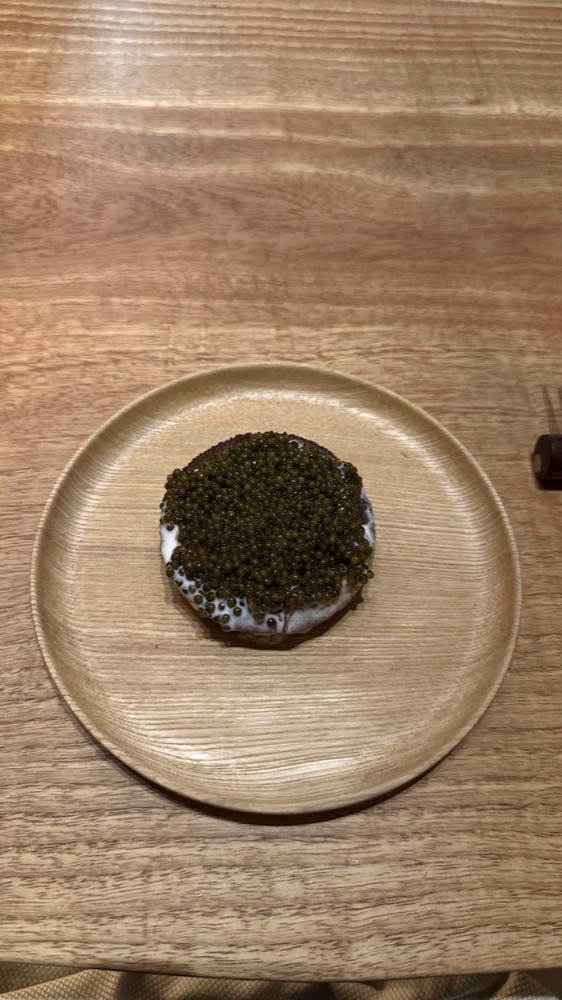
In my spare time, I enjoy trying restaurants, from local spots to Michelin-starred fine dining. Food is also a way for me to learn about different cultures. Each cuisine carries its heritage, reflecting the local environment and how people live.

There’s a lot to discover through food. And, of course, it’s delicious.

Follow along with my experiences on Instagram.

@thecuratedbites

A few highlights

Michelin-starred dining

And the list goes on…